
 +91 9152107263 | +91 22 3520 9600
 enquiry@aimscollegeofphysiotherapy.com | admin@aimscop.edu.in

Dr. Namrata Parekh (PT)
Ph.D Scholar, M.P.Th, B.P.Th | Assistant Professor
India's physiotherapy industry is changing dramatically due to governmental changes, technology breakthroughs, and a greater focus on preventive and holistic healthcare. A number of trends and opportunities are set to revolutionize the field and its influence on the health of the country as we look to the future.
Emerging Trends Shaping Physiotherapy in India
Table of Contents
- The Future of Physiotherapy: Trends and Opportunities in India
- Emerging Trends Shaping Physiotherapy in India
- Technological Integration in Rehabilitation
- Emphasis on Preventive and Holistic Care
- Educational Reforms and Professional Development
- Opportunities on the Horizon
- Frequently Asked Questions (FAQs)
- Conclusion
1. Technological Integration in Rehabilitation
Physiotherapy procedures are being revolutionized by the deployment of modern technologies:
- Robotic Assisted Therapy: To improve rehabilitation results for people with impairments, facilities such as the recently opened center in Sambalpur are implementing robotic physiotherapy units.
- AI and Remote Monitoring: AI-powered remote patient monitoring platforms are facilitating ongoing evaluation and individualized treatment regimens, enhancing patient outcomes and accessibility.
- Wearable Technology: By enabling real-time patient progress tracking, wearable technology makes it easier to make data-driven modifications to treatment plans.
2. Emphasis on Preventive and Holistic Care
Healthcare is changing from a reactive to a proactive paradigm:
- Physiotherapy for Prevention: Preventive physiotherapy is becoming more popular as a result of growing knowledge of the advantages of early intervention which aims to stop musculoskeletal problems before they worsen.
- Holistic Approaches: Physiotherapists are embracing comprehensive treatment approaches that address social, psychological, and physical facets of health like physiotherapy based on yoga, Ayurvedic massage, anesthesia, and function.
3. Educational Reforms and Professional Development
In order to satisfy the changing needs of the healthcare industry:
- Competency Based Curriculum: To guarantee that graduates have the necessary knowledge and practical skills, India has implemented a new physiotherapy curriculum that emphasizes competency-based education.
- Interdisciplinary Collaboration: Physiotherapists are increasingly collaborating with other medical specialists to promote integrated treatment and improve patient outcomes.
- Theory Knowledge Based on Practice: Treating patients using theory applied to practice is a crucial part of physical therapy.
Opportunities on the Horizon
1. Expanding Access in Rural and Underserved Areas
- Community-Based Programs: Organizations are putting in place programs that offer physiotherapy treatments in rural areas.
- School-Based Interventions: Government schools in areas like Prayagraj are implementing regular physiotherapy sessions for kids with disabilities.
2. Growth in Sports and Geriatric Physiotherapy
- Sports Physiotherapy: The demand for physiotherapists with expertise in athletic care is rising due to greater funding for sports facilities and specialized colleges.
- Geriatric Care: Physiotherapists are becoming increasingly important in helping elders manage age-related illnesses, increase mobility, and improve quality of life.
3. Entrepreneurship and Private Practice
- Create Clinics: Private practices targeting specific demographics or specialized areas of physiotherapy may be established.
- Create Health Tech Solutions: Physiotherapists and IT specialists can collaborate to develop cutting-edge platforms and tools for rehabilitation.
Frequently Asked Questions (FAQs)
1. What are the major trends in physiotherapy in India?
Technological integration, preventive care, holistic approaches, and educational reforms are key trends shaping the future.
2. Can physiotherapy help in rural areas?
Yes, community-based programs and school interventions are expanding access to underserved populations.
3. What is the role of technology in modern physiotherapy?
Robotics, AI, wearable devices, and tele-rehab enable personalized, data-driven treatment and monitoring.
4. How is physiotherapy growing in sports and geriatrics?
Specialized physiotherapists support athletes for performance and prevent injuries, while geriatric physiotherapy improves mobility and quality of life for elders.
5. Where can I study physiotherapy in India?
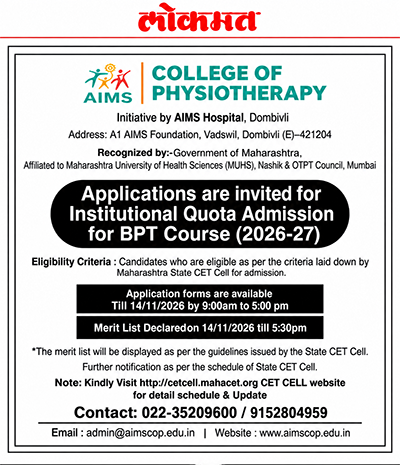
Institutions like AIMS College of Physiotherapy provide education and training for future physiotherapists.
Conclusion
Innovation, inclusion, and interdisciplinary cooperation are hallmarks of the future of physiotherapy in India. Physiotherapists may play a significant role in creating a healthy country by adopting new technologies, emphasizing preventive care, and reaching underprivileged communities. Institutions like AIMS College of Physiotherapy are training the next generation of professionals to lead these advancements.
Explore more blogs to learn about physiotherapy treatments
Student voices: what Physiotherapy Day Means to Us
Technology and Physiotherapy: An In-Depth Analysis of Modern Innovations