
 +91 9152107263 | +91 22 3520 9600
 enquiry@aimscollegeofphysiotherapy.com | admin@aimscop.edu.in
Dr. Shruti Patil
Professor, Department of Neurosciences
AIMS College of Physiotherapy (AIMS COP), Dombivli
Table of Contents
- Why Professional Communication with Seniors Matters
- Key Principles of Professional Communication
- Sample Phrases and Communication Templates
- Quick Communication Checklist for Students
- Final Takeaway
Why Professional Communication with Seniors Matters
(For Students Talking to Guides, HODs, and Clinicians)
Many students are technically strong but still feel nervous or awkward when talking to guides, HODs, senior clinicians, or hospital staff. They worry about sounding rude, unprofessional, or “too demanding,” so they either stay silent or speak in a rushed, unclear way. Good communication with seniors is a skill—and like any skill, it can be learned with the right structure and practice.
This guide focuses on practical etiquette, language, and self-awareness to help you express concerns, ask for help, and share ideas respectfully.
Key Principles of Professional Communication
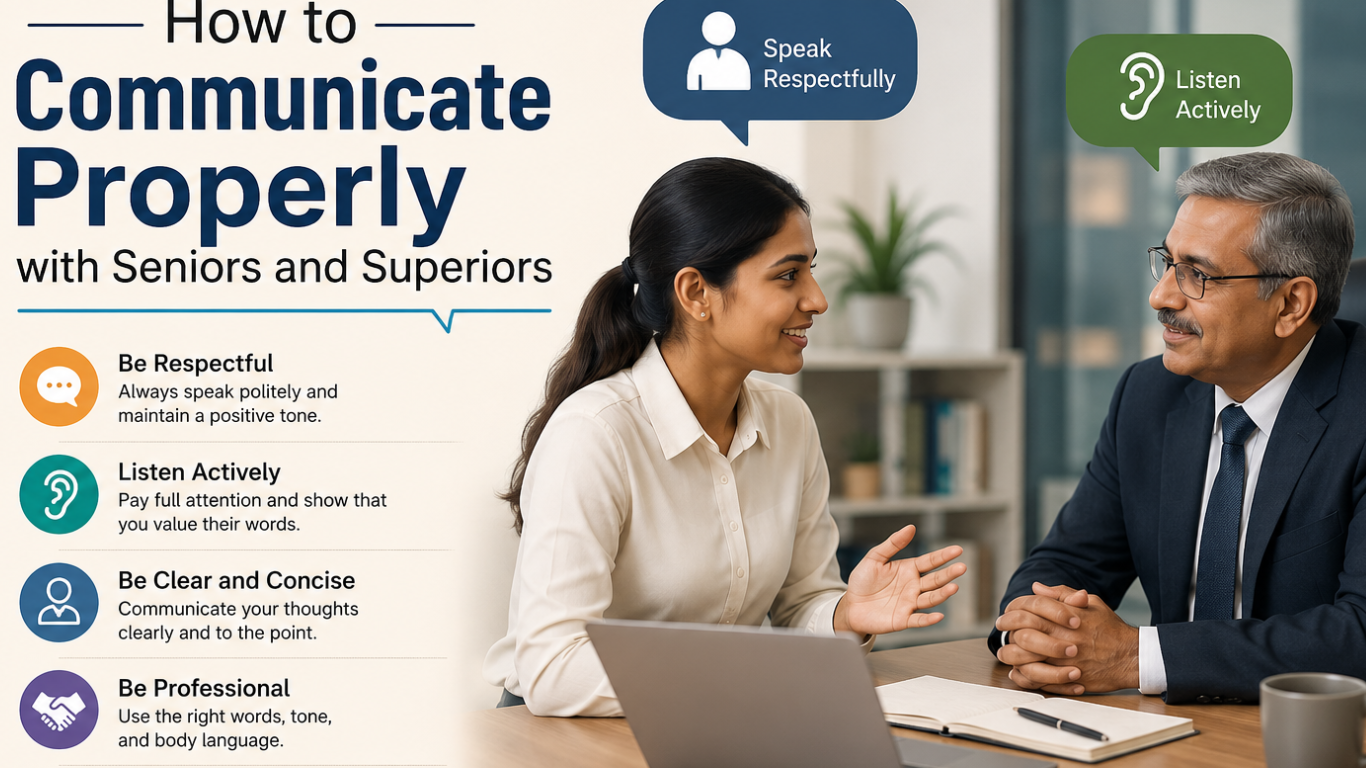
Active Listening
Listen fully before responding, avoid interrupting, and show you understand by paraphrasing:
“So what you’re saying is that I should focus more on…”
Respectful Tone and Body Language
Maintain comfortable eye contact, keep your voice calm, and avoid aggressive gestures or facial expressions (eye-rolling, loud sighs, pointing fingers).
Clarity and Conciseness
Be clear and to the point. Respect the other person’s time by avoiding long, unfocused explanations.
Choosing the Right Medium
Decide whether the issue is best handled in person, via email, or by message. Sensitive topics (conflicts, critical feedback, major issues) are usually better face-to-face or via a formal email, not casual chats.
Proper Timing
Avoid approaching seniors when they are visibly busy, stressed, or in the middle of another task. Politely ask, “Is this a good time?” or “When would be a good time to discuss something important?”
Professional Language
Use polite phrases, avoid slang, and watch your grammar and tone in both spoken and written communication. “Kindly,” “may I,” and “could you please” are generally safer than blunt requests.
Expressing Concerns Respectfully
Use “I” statements instead of blaming “you” statements.
Better: “I feel concerned about the deadline because…”
Avoid: “You never give us enough time…”
Sample Phrases and Communication Templates
Starting a Conversation
- “Excuse me, Dr. [Name], may I have a moment of your time?”
- “I appreciate your guidance and wanted to discuss something that’s been on my mind.”
- “Is this a convenient time to talk about my seminar/topic/posting?”
Raising a Concern
- “I wanted to share a concern I have regarding [issue], and I’d really value your advice.”
- “I noticed [describe issue factually], and I was wondering if we could discuss possible solutions.”
- “I’m finding it difficult to manage [X], and I would appreciate your suggestions.”
Making a Request
- “Would it be possible to extend the deadline for [task] by one day?”
- “I was wondering if you could help me with clarifying the methodology section for my seminar.”
- “Could I request your feedback on my draft before the presentation?”
Thanking and Closing
- “Thank you for your time and understanding.”
- “I appreciate your attention to this matter.”
- “Thank you for your guidance—I’ll work on the suggestions you gave.”
Quick Communication Checklist for Students
Before or after you communicate with a senior, ask yourself:
- Did I listen fully before responding?
- Is my tone calm and respectful?
- Am I using polite, professional language?
- Did I state my concern clearly and suggest a possible solution?
- Did I thank the person for their time or guidance?
If you can answer “yes” to most of these, you are already communicating more professionally than many of your peers.
Final Takeaway
Good communication with seniors is not about being fearful or over-formal; it is about being clear, respectful, and solution-oriented. When you speak in this way, you are more likely to be heard, taken seriously, and supported—whether you are discussing a seminar, a posting issue, or your future academic plans.