
 +91 9152107263 | +91 22 3520 9600
 enquiry@aimscollegeofphysiotherapy.com | admin@aimscop.edu.in
Introduction
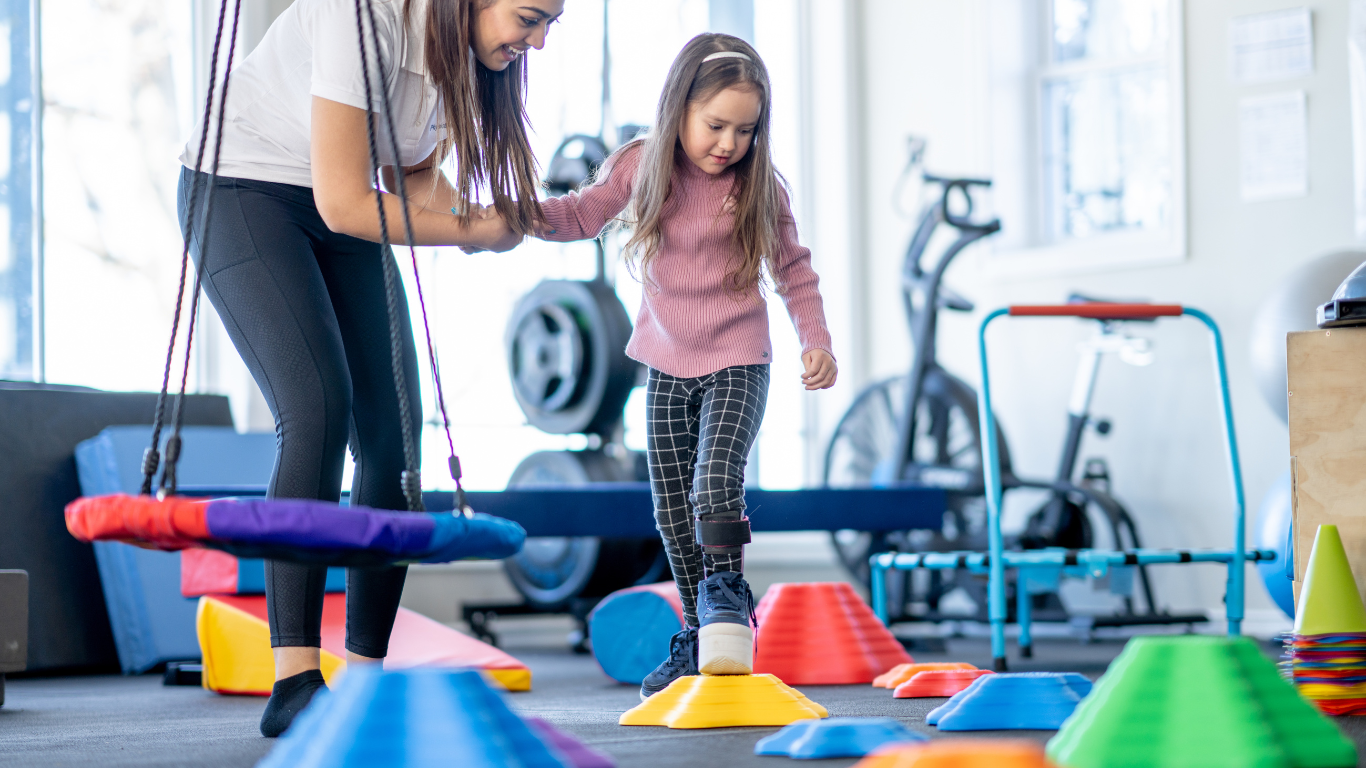
Paediatric physiotherapy relates to helping children develop and improve their ability to move, gain strength, coordinate, and grow physically. Children can be difficult to keep engaged during physiotherapy sessions, and this is where Blazepod Therapy really makes a difference. Blazepod combines technology and play-based rehabilitation to provide children with an interactive and fun physical therapy experience compared to traditional physiotherapy.
Table of Contents
- 1. Introduction to Blazepod Therapy
- 2. Why Use Blazepod Therapy in Paediatric Physiotherapy?
- 3. Key Benefits of Blazepod Therapy
- 4. Applications in Paediatric Conditions
- 5. Role of the Physiotherapist
- 6. FAQs
- 7. Conclusion
1. Introduction to Blazepod Therapy
Blazepods are small wireless touch-activated pods that change colors. They can be programmed for specific activities or exercises. Each time a pod lights up, the child must respond as quickly as possible by either tapping the pod or moving in a specific manner.
Blazepods help improve:
- Reaction time
- Speed and agility
- Coordination
- Accuracy
- Attention span
By incorporating Blazepods into paediatric physiotherapy, therapists can make rehabilitation programs more enjoyable and engaging. Young children naturally enjoy games with bright lights, making therapy sessions highly motivating.
2. Why Use Blazepod Therapy in Paediatric Physiotherapy?
Therapists report significantly higher compliance and motivation in children’s treatment when using Blazepods. Traditional repetitive exercises may feel boring, but Blazepod therapy turns rehabilitation into fun and exciting challenges.
Advantages include:
- Increased child participation and motivation
- Improved focus and engagement
- Measurable and goal-directed outcomes
- More active movement opportunities
When rehabilitation feels like a game, children are more consistent and achieve better results.
3. Key Benefits of Blazepod Therapy
Cognitive Development
Blazepod exercises improve:
- Attention and focus
- Visual perceptual ability
- Decision-making capability
- Processing speed
Children develop quicker responses to visual prompts and strengthen brain-body coordination.
Physical Fitness
Blazepods enhance:
- Agility
- Balance
- Endurance
- Muscle strength
- Cardiovascular fitness
Dynamic movement during sessions improves overall physical health.
Neuromuscular Coordination
The therapy encourages precise and goal-directed movements, improving:
- Hand-eye coordination
- Motor planning
- Postural control
- Movement accuracy
4. Applications in Paediatric Conditions
Cerebral Palsy
Helps improve coordination, reaction time, postural stability, and functional movement.
Developmental Coordination Disorder (DCD)
Improves motor planning, balance, and movement sequencing.
Autism Spectrum Disorder (ASD)
Supports eye tracking, attention, focus, and social interaction through structured play.
Obesity or Sedentary Lifestyle
Improves cardiovascular endurance, increases physical activity levels, and supports weight control in an engaging way.
5. Role of the Physiotherapist
The physiotherapist plays an important role in designing Blazepod activities tailored to each child’s abilities and therapy goals.
The physiotherapist will:
- Modify exercises according to diagnosis and ability
- Gradually increase activity complexity
- Collect objective data (reaction time and accuracy)
- Monitor movement quality and performance changes
By reviewing performance data, therapists can adjust treatment plans to ensure continuous improvement while keeping sessions structured and fun.
6. FAQs
Is Blazepod therapy safe for children?
Yes, Blazepods are safe when used under the supervision of a qualified physiotherapist. Activities are customised according to the child’s age and physical condition.
At what age can children start Blazepod therapy?
Blazepod therapy can be introduced to children as young as 3–4 years, depending on their developmental level and ability to follow instructions.
How long does a typical Blazepod session last?
Sessions usually last between 20 to 45 minutes, depending on the child’s tolerance and therapy goals.
Can Blazepod therapy replace traditional physiotherapy?
No, it does not replace traditional therapy but enhances it. Blazepods are used as a supportive tool to make exercises more engaging and measurable.
7. Conclusion
Blazepod Therapy is an exciting way to incorporate technology into paediatric rehabilitation. It uses fun and interactive activities that help children build strength, improve coordination, develop confidence, and increase participation. With proper guidance from qualified physiotherapists, children can achieve measurable results and stay motivated throughout their rehabilitation journey.